Screens are now part of everyday family life. Whether it’s a video call with family members who live far away, watching a favourite nursery rhyme or keeping little ones entertained while dinner is cooking, most families use screens in one way or another.
However, a recent landmark study has suggested that screen time for children under two may be linked to long-term effects on development. The researchers recommend avoiding screen time for children under two wherever possible, while recognising an important exception for shared screen use that encourages “bonding, interaction and conversation”.
We’re not sharing this to alarm you or make you feel guilty for allowing your little one some screen time. In reality, screens are part of modern life and most families will use them at times.
Instead, we think this research reinforces something we’ve always believed at Sandytots: babies and toddlers learn best through real-world experiences, play and responsive interactions with the adults who care for them.
While screens can certainly have their place, they shouldn’t replace the rich, hands-on experiences that help young children learn about the world around them.

Why do under-twos learn best through face-to-face interaction?
Under-twos learn best through face-to-face interaction because it helps to develop speech and language skills as well as helping you to bond.
It’s so important for your child to see your lips, eyes, and expressions as you talk. They learn best by watching how you use sounds, words, and emotions. Research shared by Psychology Today shows that during the first year, babies shift their attention from a caregiver’s eyes to their mouth – because seeing how words are formed gives them vital visual cues for language learning.
Singing and talking face-to-face also captures their attention, helping them focus on your face and making every interaction a chance to learn. They’ll get to watch your face and mouth as you model words, making it easier for them to join in.

Why is it important to talk, sing, read and play together with your child?
Talking, singing, reading and playing are some of the best ways to support your child’s development. These everyday interactions help build language, communication, confidence and social skills, while strengthening the bond between you and your little one.
By gently repeating, expanding on and encouraging your child’s words, you help them grow their vocabulary and develop confidence in communicating. Best of all, these moments happen naturally throughout the day, whether you’re playing, preparing meals or sharing a bedtime story.
In fact, the National Library of Medicine estimates that children from literacy-rich homes hear around 1.4 million more words during storybook reading than children who are never read to. It highlights just how powerful reading together can be in supporting your child’s language and communication skills.
Find out more: The Power of Language Modelling: Simple Ways to Boost Your Child’s Speech
How can you support healthy screen habits for young children?
According to the UK government’s Best Start In Life this is how you can support healthy screen habits for children under 5:
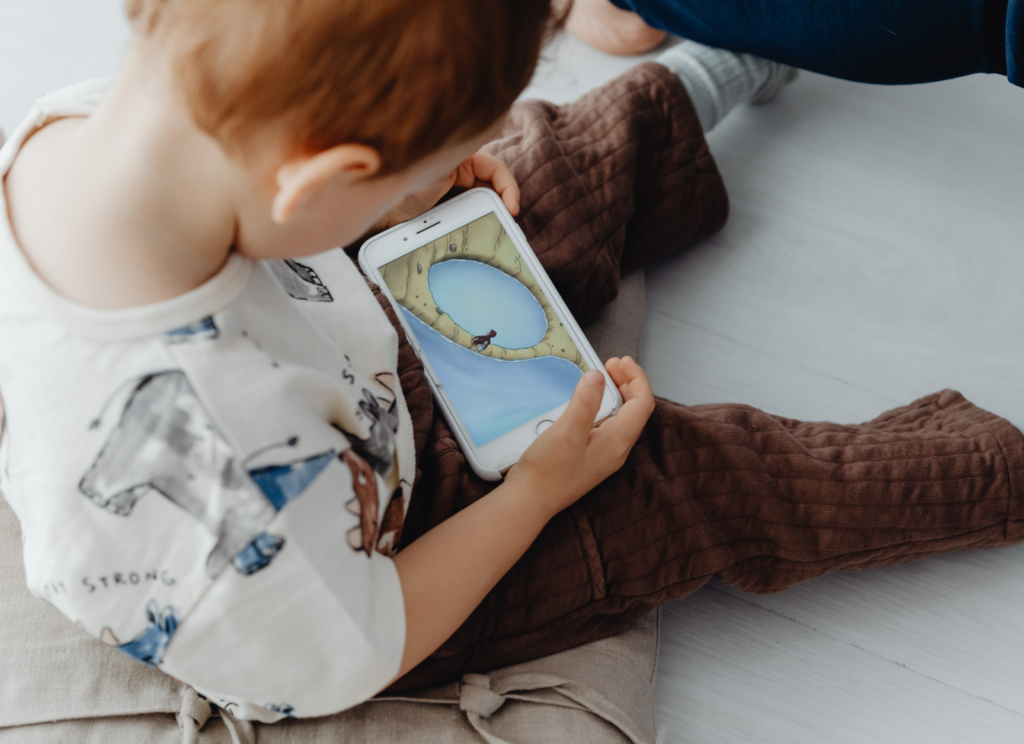
Under 2 years: Avoid screen time other than for shared activities with family that encourage bonding, interaction and conversation. Shared activities could include video calling with friends and family or looking through digital photo albums together.
2-5 years: Try to keep it to 1 hour a day. Less if possible.
What Types of Content Should Young Children Watch?
Young children’s brains are stimulated much more easily than adults’, so they need content specifically made for them.
Slow-paced content: Slow-paced, predictable content is better for young brains. Fast-paced, over-stimulating social media-style videos may affect how young children learn to concentrate, so it’s best to avoid them.
Choose safe content: Use parental controls to block inappropriate, harmful content.
Avoid social media: Social media isn’t made for young brains, so it should be avoided.
Avoid AI: Don’t let young children use AI toys, tools or chatbots until there’s more evidence on how they affect your child. This includes devices or apps such as interactive robots, smart speakers or AI chat apps.
Read more guidance from Best Start In Life here.
How Sandytots Supports communication and development
At Sandytots, we believe children learn best by doing. That’s why our days are filled with sensory play, outdoor adventures, stories, songs and hands-on activities that encourage children to explore, communicate and build confidence.
Whether we’re reading together, singing nursery rhymes, splashing in puddles, exploring our gardens or getting creative with messy play, every experience is an opportunity to spark conversation, develop language and support cognitive development.
We create meaningful, real-life learning opportunities that help children develop their communication, curiosity, confidence and understanding of the world around them.
Every family is different, and finding the right balance can take time. If you’d like to chat about screen time or your child’s development, please speak to your child’s key worker.